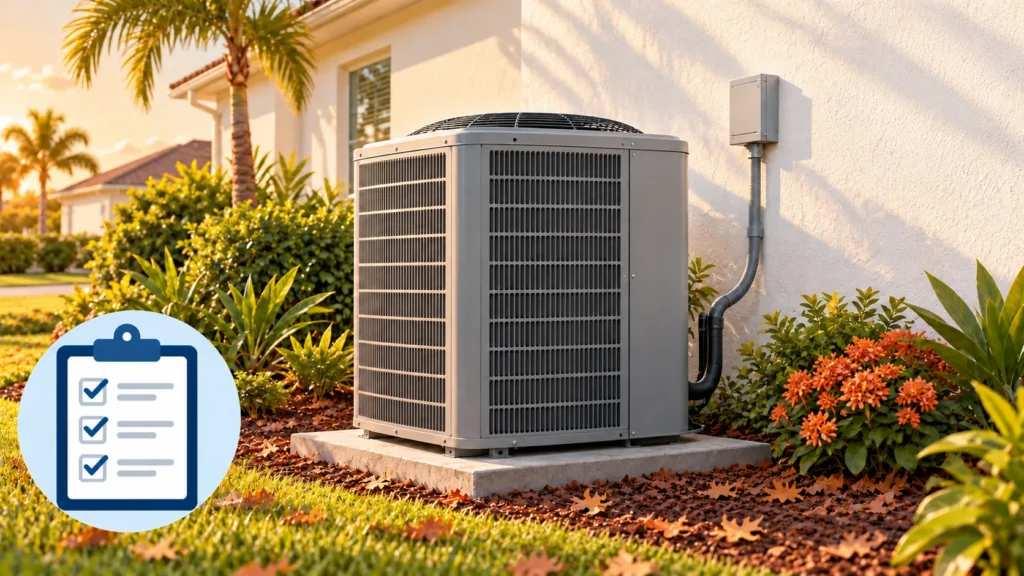
Fall in Northeast Florida doesn’t look like much of a season change. The pool is still warm, the AC is still running, and the first real cold morning might not show up until December. But your system has just come off its hardest stretch of the year, and for a lot of homes here, it’s about to start a second job. That’s why fall is one of the two visits we recommend every year.
ENERGY STAR puts it simply: check the cooling system in the spring and the heating system in the fall. In Florida, those are often the same piece of equipment. About 31% of Florida homes heat with a central heat pump, the same outdoor unit that cools them all summer (U.S. Energy Information Administration). A fall tune-up does two things at once: it undoes some of the wear from summer, and it makes sure the heat works before you need it.
Summer is hard on a Florida system
Florida systems run about nine months out of twelve, and June through September they barely stop. By October, three things have usually happened:
- The coils are dirty. Pollen, dust, grass clippings and yard debris build up on the outdoor coil, and the indoor coil collects whatever got past the filter. Dirty coils make the system run longer to do the same job, which costs more to run and wears the equipment out sooner.
- The drain line has been working overtime. Our humidity means your system pulls gallons of water out of the air on a summer day. That water carries algae and sludge into the condensate drain line. A half-clogged line in October becomes water in the pan, a tripped float switch, or a stain on the ceiling later.
- Storm season has taken its toll. Hurricane season runs through November 30. Power flickers, wind-blown debris against the outdoor unit and, near the beaches, salt spray on the coil all add up, even in a year without a direct hit.
Your heat pump is about to switch jobs
If you have a heat pump, the parts that make heat haven’t done anything since last winter. The valve that reverses the system, the defrost controls and the backup heat strips all sit unused for months, and the first cold snap in December or January is the worst time to find out one of them isn’t working. That’s the week everyone in town calls at once.
One thing to know about backup heat: when a heat pump can’t keep up, the electric heat strips take over. They keep you warm, but they cost noticeably more to run than the heat pump itself. A system that quietly leans on its strips all winter shows up first on the power bill. Part of a fall visit is making sure the heat pump is doing the work, not the strips.
If you heat with gas, the fall visit is when the gas connections, burner and heat exchanger get checked, before the furnace runs for the first time.
What a fall tune-up covers
- Electrical check. We tighten connections and test the capacitor, contactor and motors. These are the small parts that fail most often, and they usually give warning signs before they do.
- Coil cleaning. We clean the outdoor coil and check the indoor coil and drain pan.
- Refrigerant and airflow. We check refrigerant levels, look for leaks and confirm the system is cooling and moving air the way it should.
- Drain line. We clear and flush the condensate line and test the safety float switch if your system has one.
- Heating test. We run the system in heat mode and check the reversing valve, defrost and backup heat, or the burner and heat exchanger on a gas furnace.
- Thermostat and filter. We test the thermostat and clean or replace the filter.
- A straight report. We tell you what we found, what can wait and what can’t, with clear recommendations and no pressure.
Why fall is the smart time to book
Fall is the slower season for HVAC companies, so appointments are easier to get than in June or July. And if the visit turns up something bigger, like a failing part or a system near the end of its life, you have the whole winter to weigh your options. That’s a much better place to make a decision than a 95-degree afternoon with a house that won’t cool.
What you can do yourself
- Check your filter every month and change it when it looks dirty. A clogged filter strains the system and costs you money.
- Keep the outdoor unit clear. Pull back plants, leaves and storm debris so air can move freely around it.
- Try the heat before you need it. On a mild fall day, switch the thermostat to heat for a few minutes. A short burning-dust smell the first time is normal. A smell that lingers, or anything that smells electrical, means turn it off and call us.
- Watch the drain. If you see standing water in the pan under the indoor unit, or water around it, schedule a visit before it becomes a leak.
Ready for your fall visit?
We’re a Nocatee-based, licensed and insured HVAC and plumbing company serving Jacksonville, Ponte Vedra and St. Johns County. Every 365 Protection Plan includes at least two HVAC maintenance visits a year, so your fall tune-up is already part of the plan. To book a tune-up, call us at (904) 460-2998 or book online.
Related service: AC Maintenance · Heating Repair · 365 Protection Plan